

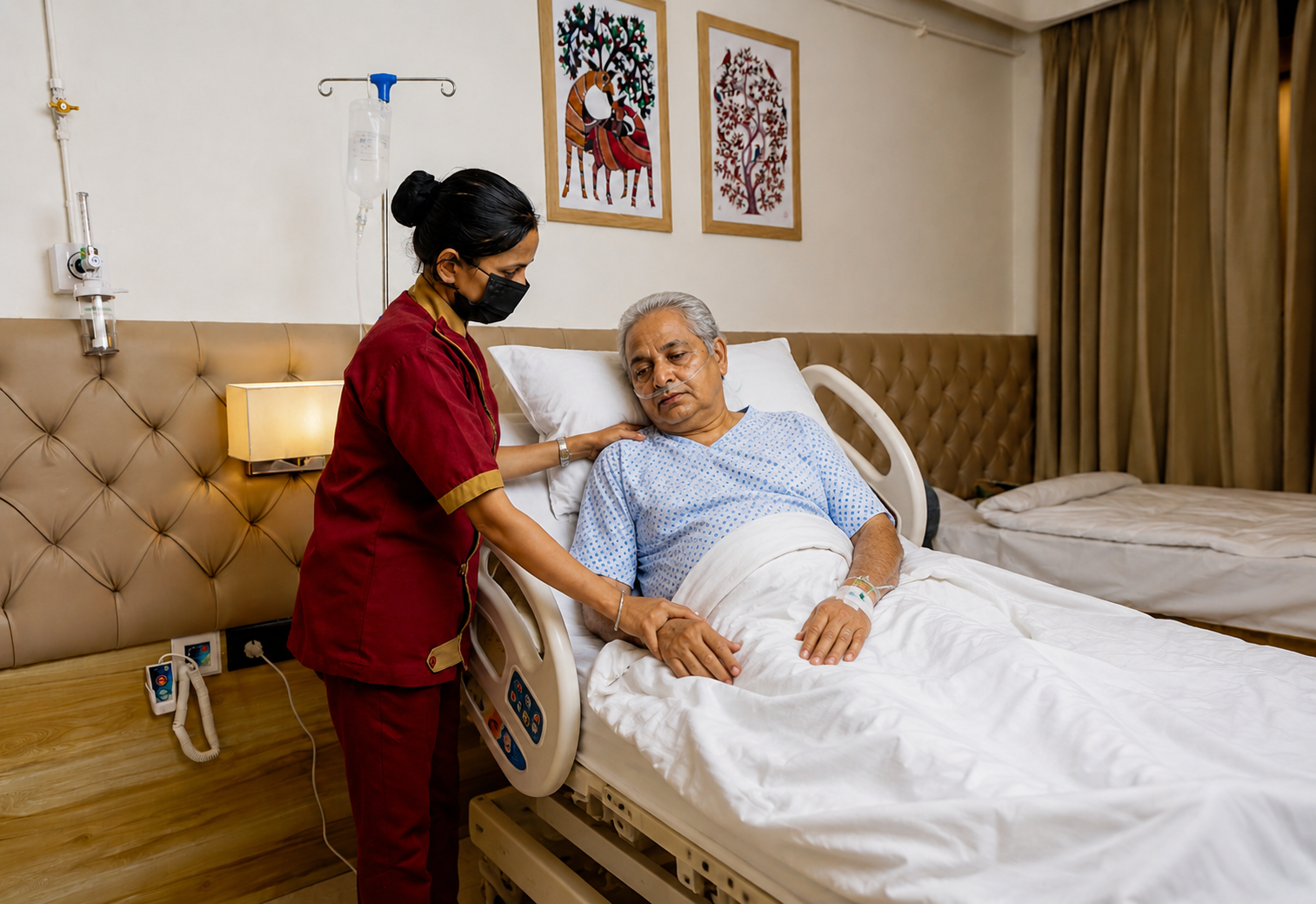
For many families, the biggest misconception about stroke recovery is believing that the difficult phase ends after hospital discharge. In reality, discharge is often the beginning of a much longer and more demanding journey.
A stroke survivor may leave the hospital medically stable, but still struggle with walking, speaking, swallowing, balance, or even simple daily activities. Many patients continue to remain physically weak and highly dependent on caregivers long after emergency treatment is completed.
This gap between hospital treatment and functional recovery remains one of the most overlooked challenges in stroke care across India. Families are often emotionally unprepared for what comes next. Questions around mobility, physiotherapy, paralysis recovery, long-term care, and rehabilitation support begin almost immediately after returning home.
Recovery after stroke is not simply about survival. It is about helping the patient regain movement, confidence, communication, and independence. The quality of rehabilitation during the first few months after stroke often determines how much functional recovery a person achieves over time.
Why Hospital Discharge Does Not Mean Full Recovery
Hospitals primarily focus on stabilising the patient during the emergency phase of stroke. Once the immediate medical risk reduces, discharge planning begins. However, medical stability is very different from neurological recovery.
Many stroke survivors continue to experience weakness, paralysis, speech difficulties, swallowing problems, memory issues, poor balance, and emotional changes even after leaving the hospital. Some patients cannot sit independently, while others struggle to stand or walk safely.
This is where families often feel overwhelmed. Managing stroke recovery at home requires much more than medicines and periodic doctor consultations. Rehabilitation becomes a daily process that demands physical effort, emotional resilience, and continuous supervision.
Without proper rehabilitation, patients may gradually lose muscle strength, develop stiffness, experience falls, or become increasingly dependent over time. In some cases, avoidable complications such as infections, pressure injuries, or repeat hospitalisation may also occur.
The Growing Stroke Burden in India
India is witnessing a steady rise in stroke-related disability, especially among older adults. Hypertension, diabetes, obesity, stress, sedentary lifestyles, and cardiac conditions are contributing significantly to the increasing number of stroke cases across urban and semi-urban populations.
At the same time, changing family structures are making long-term recovery management more difficult. Earlier, larger joint families could collectively support caregiving responsibilities. Today, many families live in nuclear setups where one or two individuals manage the entire recovery process while balancing work and personal responsibilities.
Stroke recovery can continue for several months and sometimes even years. Many survivors require assistance with mobility, toileting, bathing, feeding, medication management, and rehabilitation exercises during the initial stages of recovery.
This prolonged dependence creates physical and emotional pressure on both patients and caregivers.
The Hospital-to-Rehab Transition Gap
One of the biggest problems in stroke recovery is the gap between hospital care and rehabilitation support after discharge.
Families often assume that the patient will naturally improve with rest and medicines at home. However, neurological recovery requires structured and continuous rehabilitation.
The first few months after stroke are considered extremely important because the brain responds more actively to rehabilitation during this period. Neurological specialists often describe this as the most critical recovery window for rebuilding movement pathways and improving functional abilities.
Unfortunately, many patients lose valuable recovery time after discharge because rehabilitation becomes inconsistent. Physiotherapy sessions may get delayed, mobility exercises may become irregular, and patients may spend long hours inactive due to fear of falls or lack of supervision.
This is one reason why recovery progress often slows down significantly after patients return home.
Why Stroke Rehabilitation Matters
Stroke rehabilitation is not limited to physiotherapy alone. A stroke affects multiple functions of the body simultaneously, and recovery usually requires coordinated support across several areas.
Many patients struggle not only with movement but also with speech, swallowing, cognition, emotional health, and endurance. Some may regain mobility but continue facing severe balance issues. Others may improve physically while struggling emotionally with anxiety, depression, or social withdrawal.
This is why neurological rehabilitation focuses on comprehensive recovery rather than isolated treatment.
A structured rehabilitation program generally includes stroke physiotherapy, speech therapy, occupational therapy, mobility training, nutritional support, and medical supervision. The aim is to help the patient regain as much independence and functionality as possible.
Stroke Physiotherapy: The Foundation of Mobility Recovery
Stroke physiotherapy plays a central role in helping survivors regain movement and rebuild physical confidence.
After stroke, muscles often weaken because the brain can no longer send proper movement signals to certain parts of the body. Patients may lose balance, coordination, and walking ability. In severe cases, paralysis recovery may take months of continuous rehabilitation.
Physiotherapy helps retrain the brain and body through guided repetitive movement. Patients gradually relearn activities such as sitting, standing, balancing, walking, and transferring safely.
Recovery does not happen overnight. The brain improves slowly through repetition and consistency. This is why regular physiotherapy is far more effective than occasional therapy sessions.
For many stroke survivors, even small improvements such as sitting independently, standing with support, or walking short distances can significantly improve emotional wellbeing and reduce caregiver burden.
Why Home-Based Stroke Recovery Often Becomes Difficult
Many families initially prefer home-based recovery because it feels emotionally comforting and familiar for the patient. However, over time, managing rehabilitation at home can become extremely challenging.
Caregivers often struggle with physical exhaustion, especially when the patient requires support for transfers, mobility, toileting, or daily activities. Fear of falls becomes another major concern, particularly in elderly patients with weakness or balance issues.
Maintaining therapy consistency also becomes difficult. Patients may miss physiotherapy sessions because of fatigue, logistical challenges, lack of motivation, or emotional burnout within the family.
Home environments are usually not designed for long-term neurological rehabilitation. Limited supervision, lack of mobility support systems, and inconsistent exercise routines can affect recovery outcomes significantly.
In moderate to severe stroke cases, rehabilitation often requires a more structured and supervised approach.
The Growing Need for Structured Neurological Rehabilitation
Across India, there is increasing awareness around professionally supervised rehabilitation environments for stroke recovery.
These rehabilitation-focused settings bridge the gap between hospital treatment and long-term home recovery. Instead of fragmented care through multiple providers, patients receive coordinated rehabilitation support under one system.
Structured neurological rehabilitation usually combines physiotherapy, mobility assistance, nursing care, medical monitoring, speech rehabilitation, nutritional management, and emotional support.
This approach becomes particularly important for elderly stroke survivors who may also have diabetes, cardiac conditions, respiratory issues, or reduced physical endurance.
Continuous supervision not only improves rehabilitation consistency but also reduces the risk of complications such as falls, infections, and prolonged immobility.
Families also benefit emotionally because caregiving responsibilities become more manageable when rehabilitation is professionally coordinated.
Emotional Recovery Is Equally Important
Stroke recovery affects emotional health as deeply as physical health.
Many survivors feel frustrated because they suddenly lose independence. Some withdraw socially because they feel embarrassed about mobility limitations or speech difficulties. Others experience anxiety about becoming dependent on family members.
Caregivers also experience emotional stress. Watching a loved one struggle with basic activities often becomes physically exhausting and mentally overwhelming over time.
Recovery therefore requires emotional reassurance alongside physical rehabilitation.
Patients who receive encouragement, structured support, and continuous engagement often remain more motivated during recovery. Emotional confidence plays a major role in improving rehabilitation participation and long-term outcomes.
Recovery Takes Time and Patience
There is no fixed timeline for stroke recovery. Some patients regain mobility within months, while others may require longer rehabilitation support.
Recovery depends on several factors including stroke severity, age, overall health, rehabilitation consistency, and medical complications. The goal is not always perfect recovery. The goal is improving functional independence, safety, mobility, and quality of life as much as possible.
Even moderate recovery can make a meaningful difference. A patient who regains the ability to sit independently, walk short distances, or perform basic daily activities often experiences a major improvement in confidence and emotional wellbeing.
Final Thoughts
Stroke recovery extends far beyond hospital discharge. For many families, the real rehabilitation journey begins once the patient returns home.
Neurological recovery requires structured rehabilitation, consistency, physiotherapy, emotional support, and long-term planning. Recovery outcomes often depend heavily on how rehabilitation is managed during the first few months after stroke.
As awareness around stroke rehabilitation grows in India, more families are recognising the importance of supervised recovery environments that provide continuity of care beyond hospitals.
With timely intervention, regular stroke physiotherapy, and structured neurological rehabilitation, many stroke survivors can regain meaningful independence and improve their quality of life over time.